Strategic Trends in Data Quality: Metric in Motion – An AI-Enabled Approach to Data Quality
High-quality data is more than a benchmark – it is a strategic necessity for global trust, compliance and interoperability. In this blog, Zornitsa Manolova, Head of Data Quality Management and Data Science at GLEIF, explores how AI is helping to strengthen Data Quality checks to build a more transparent global economy.
Author: Zornitsa Manolova
Date: 2026-02-06
Views:
In an increasingly interconnected global economy, the ability for organizations to trust and use data effectively is the foundation for innovation, growth, and competitiveness.
A high-quality data ecosystem is a driver of change and innovation that enables organizations to identify and seize new opportunities, while low data quality can lead to inefficiencies and exposure to regulatory and reputational risks.
GLEIF is committed to optimizing the quality, reliability, and usability of LEI data. Since 2017, it has published monthly reports to transparently demonstrate the overall data quality achieved in the Global LEI System.
To aid broader industry understanding and awareness of GLEIF’s data quality initiatives, this new blog series explores key metrics included within the reports.
This month’s blog highlights how AI helps enhance Data Quality checks.
Ensuring reliable LEI data at a global scale requires consistent interpretation of regulatory and policy requirements. As these requirements evolve and grow in complexity, AI is strengthening GLEIF's capabilities to support scalable quality assurance while ensuring that transparency and governance remain central.
From Policy Requirements to Data Quality Checks
The Regulatory Oversight Committee (ROC) defines the business rules and policies governing the Global LEI System. These requirements are then described and translated into technical specifications through the State Transition and Validation Rules. Together, they define the business logic and processes for the issuance, update, management, and publication of LEI data under the Common Data File (CDF) format.
GLEIF operationalizes these policies by converting them into detailed technical specifications and implementing them through Data Quality checks, ensuring that regulatory intent is consistently reflected in the LEI data published across the system.
Building Consistency through Data Quality Rule Setting
Central to this implementation is GLEIF’s Data Quality Rule Setting process, a structured and systematic approach that defines how each Data Quality check is specified, interpreted, and applied across the Global LEI System.
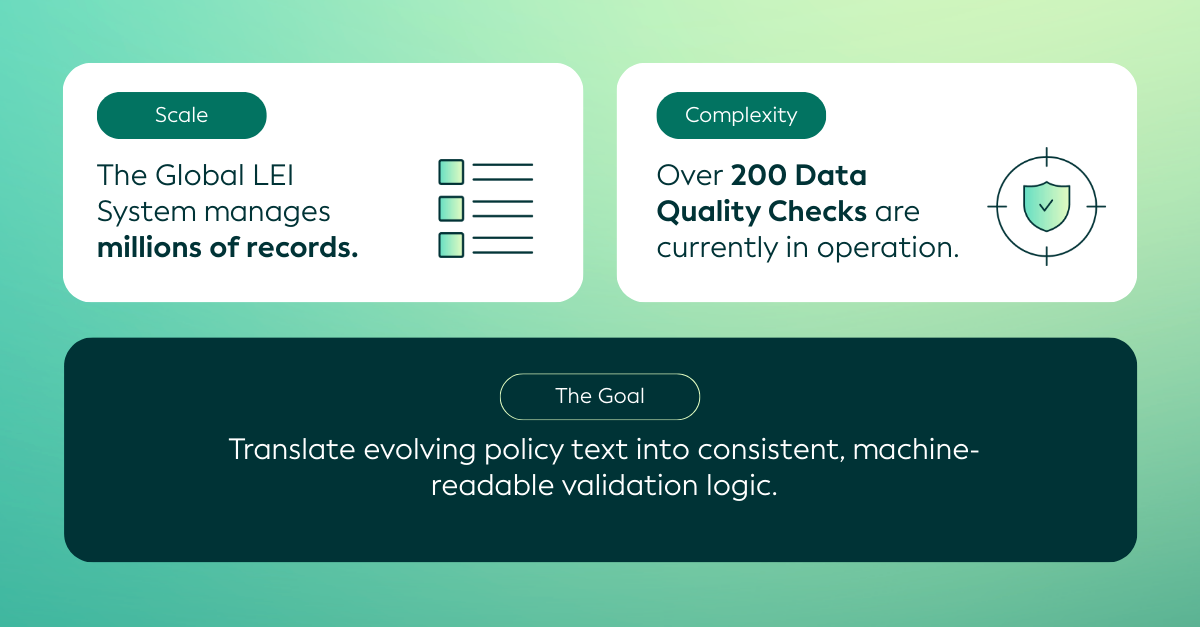
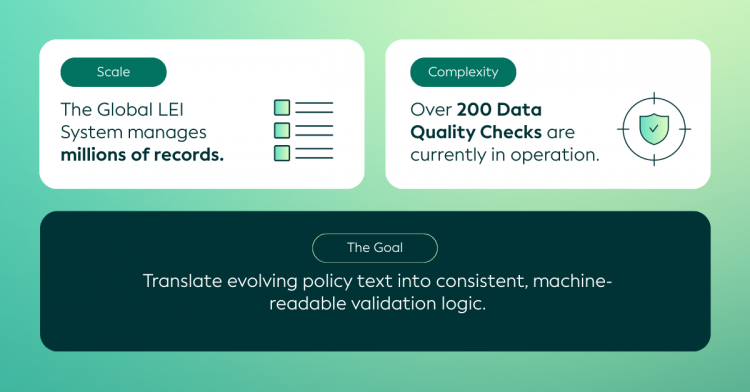
By clearly formalizing the logic behind each check, the process ensures consistent, reproducible evaluations. This enables transparent, scalable data-quality assessments across millions of LEI records and helps ensure consistent application of the same rules across jurisdictions, issuers, and update cycles.
Yet as the Global LEI System evolves and grows, so too does the number of rules and corresponding checks. There are now over 200 Data Quality checks, and this increasing scale introduces additional complexity and new challenges.
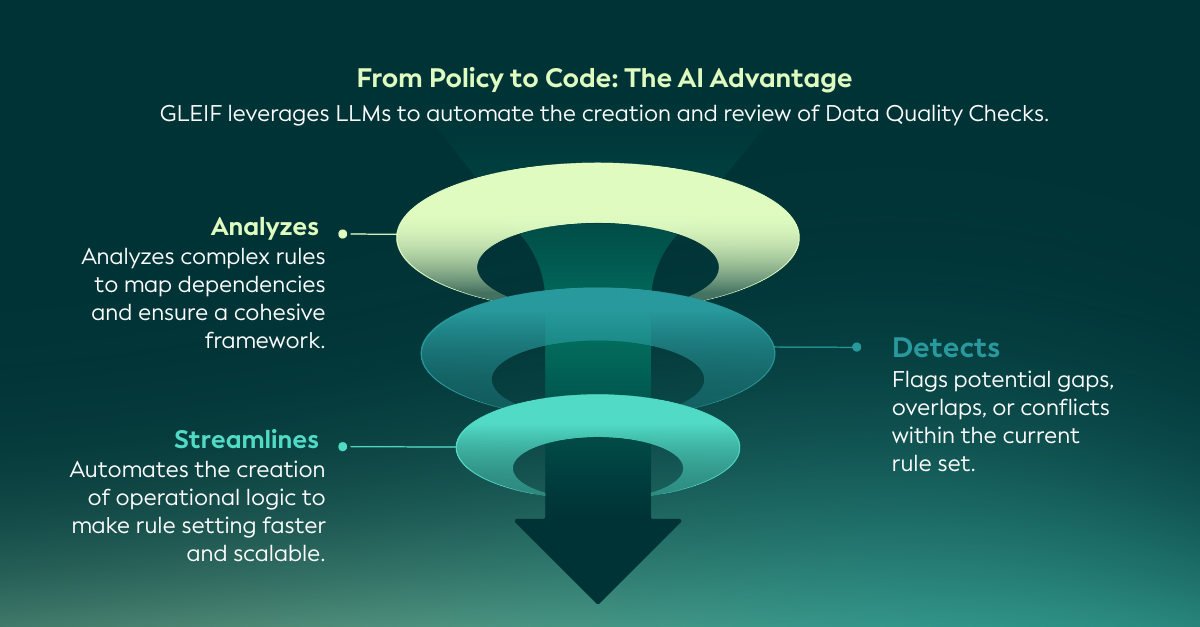
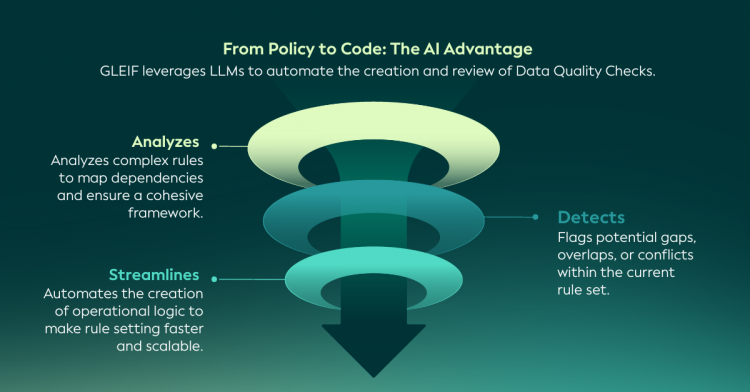
AI is helping to address these emerging considerations. Supporting the analysis of complex, interdependent rules helps identify overlaps or gaps across checks and streamlines the creation and maintenance of Data Quality logic. As a result, the overall Data Quality Framework becomes more efficient, adaptable, and scalable – while remaining grounded in established governance processes.
To illustrate how this works in practice, the following section provides a technical deep dive into how Large Language Models (LLMs) support the structured conversion of policy text into machine-readable rules and operational Data Quality checks.
Deep Dive: Translating Policy Text into Machine-Readable Rules
GLEIF uses LLMs to support the identification of new rules and help detect potential contradictions with existing Data Quality checks, enabling an end-to-end review process – from regulatory and policy documents through to their implementation.
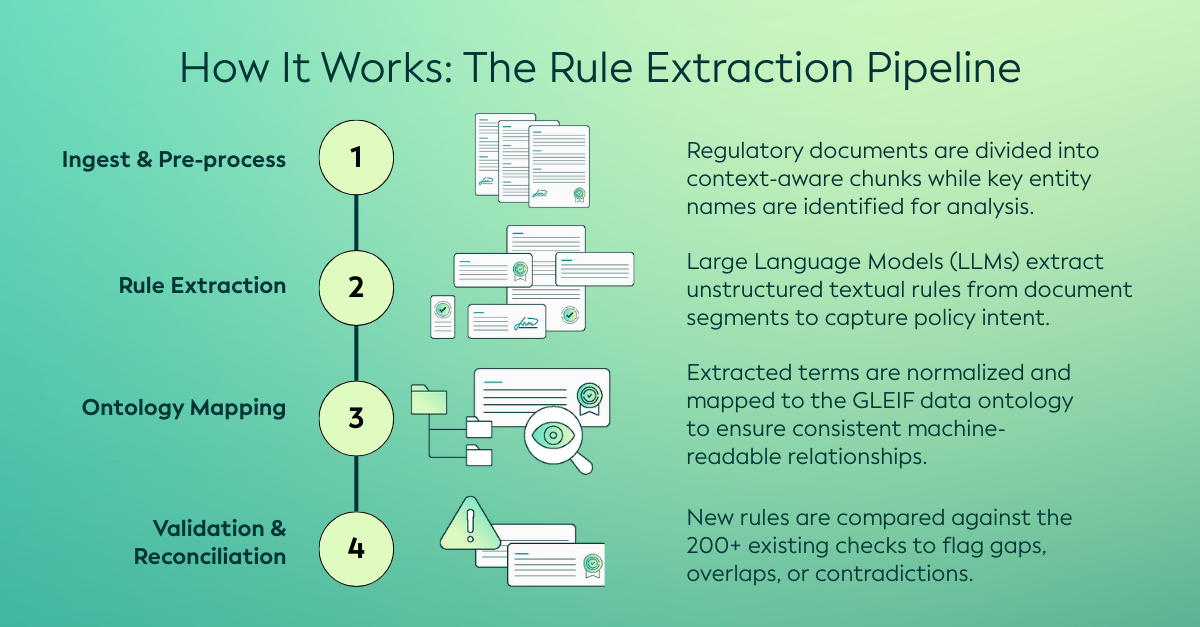
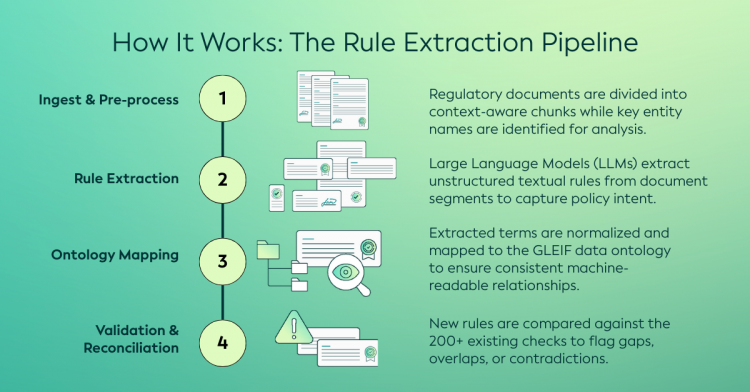
This approach follows a clear and structured workflow that ensures policy intent is consistently reflected in operational checks across the Global LEI System. The workflow can be summarized in the following stages:
Pre-processing: The process starts with systematic analysis of policy and standards documents to identify relevant rules and requirements. AI helps surface the key concepts and conditions contained in these texts, ensuring that important regulatory expectations are captured accurately and comprehensively. In this initial stage, the source document is ingested to reliably extract the relevant rules. This includes:
dividing the document into context-aware chunks
identifying entity names and terms
filtering context-aware chunks by key-entity-name search
extracting the unstructured textual rules.
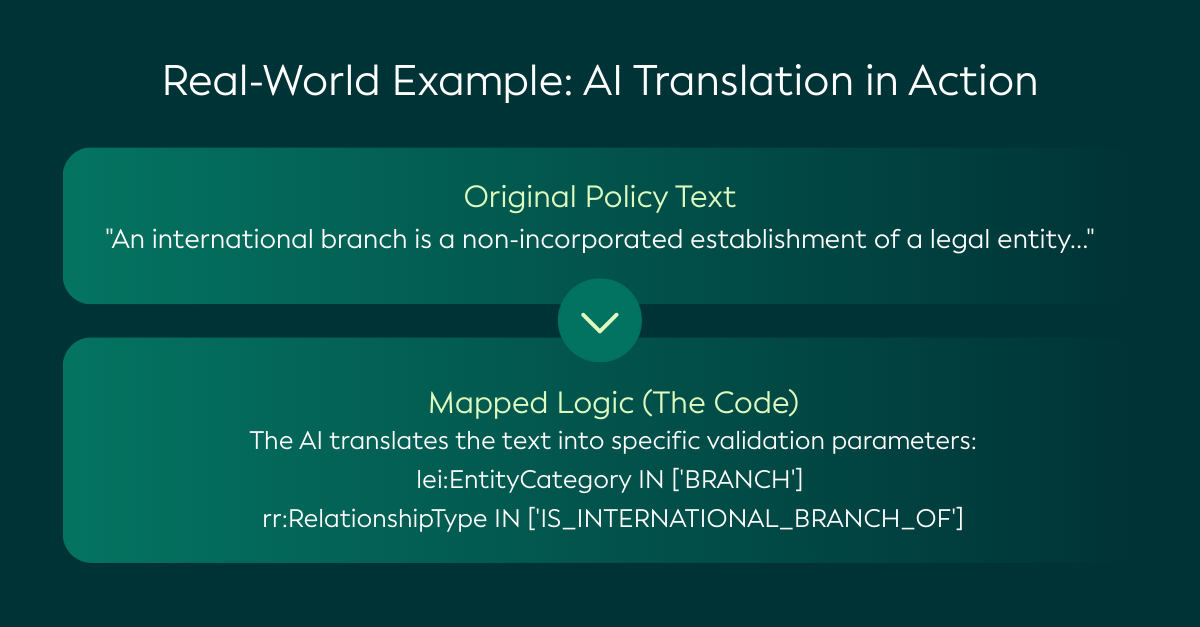
Example: An international branch is a non-incorporated establishment of a legal entity located in a different jurisdiction from its head office.
Entity Resolution with Ontology Mapping: The requirements described in the formal documents are then aligned with GLEIF’s rules language model, creating a shared understanding of how entities, attributes, and relationships should be interpreted. This step is essential for consistency, ensuring that the same concepts are applied uniformly, even when described differently across source documents. To this end, the extracted terms are normalized and mapped to the GLEIF Rule Setting ontology.
Example:
“An international branch is a non-incorporated establishment of a legal entity” is mapped to:
 - *lei:EntityCategory IN ['BRANCH']

 - *rr:RelationshipType IN ['IS_INTERNATIONAL_BRANCH_OF']
“located in a different jurisdiction from its head office” is mapped to:
- *lei:LegalAddress/lei:Country NOT $EQUALS $END_NODE_RECORD lei:LegalJurisdiction $COUNTRY_PART
Check creation and Validation: Finally, the derived rules are reconciled with existing Data Quality checks, with AI helping identify where checks already exist, where they overlap, and where contradictions or gaps may arise. This approach helps manage complexity across more than 200 checks, with implementation typically involving specification, development, review, testing, and release. This supports controlled, transparent evolution of the rule set and strengthens the overall coherence, scalability, and reliability of the Data Quality Framework.
How AI Strengthens Data Quality Checks for a More Transparent Global Economy
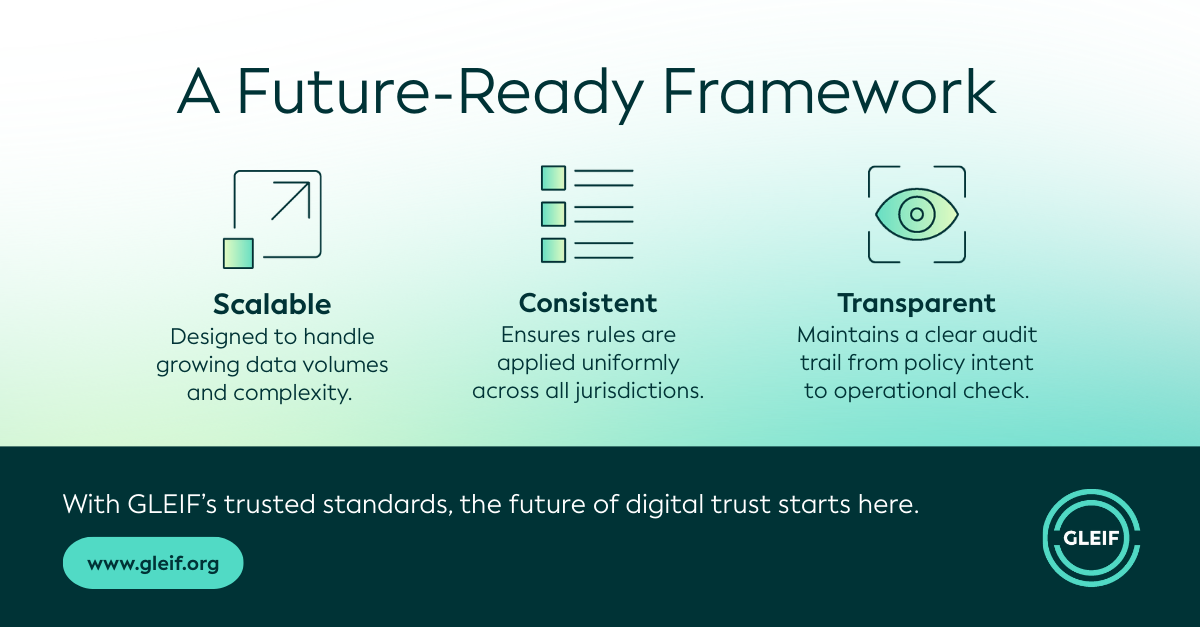
By combining AI-driven automation with human expertise, GLEIF is strengthening both the efficiency and reliability of its Data Quality Framework. An ontology-driven approach ensures consistency and accuracy, while the underlying processes are designed to scale as data volumes and complexity continue to grow. At the same time, AI supports continuous improvement by highlighting ambiguities in rule language and surfacing opportunities to refine methodologies. Together, these capabilities reinforce a resilient, transparent, and future-ready approach to data quality across the Global LEI System.
If you would like to comment on a blog post, please identify yourself with your first and last name. Your name will appear next to your comment. Email addresses will not be published. Please note that by accessing or contributing to the discussion board you agree to abide by the terms of the GLEIF Blogging Policy, so please read them carefully.
Zornitsa Manolova has been leading GLEIF’s Data Quality Management and Data Science team since April 2018, responsible for safeguarding and continuously improving data quality and governance across the Global LEI System by using advanced analytics to turn complex data into trusted infrastructure. With a long-standing focus on artificial intelligence and machine learning dating back to her university studies, Zornitsa has consistently applied cutting-edge analytical techniques to complex, real-world data challenges. Before joining GLEIF, she managed international forensic data analytics projects at PwC Forensics, supporting large-scale financial investigations and developing sophisticated approaches to entity resolution, anomaly detection, and data-driven insights.