Planned maintenance: Brief service interruptions may occur between 19 October and 4 November 2026.
News & Media
GLEIF Blog
The LEI in Numbers: Q3 2026 Data Shows an Expanding, More Connected Global LEI System
Growing adoption, broader ecosystem participation, and wider interoperability are strengthening the Global LEI System as the foundation for trusted organizational identity
Author: Alexandre Kech
Date: 2026-10-22
Views:
The Global LEI Foundation (GLEIF) is proud of its ongoing transparency initiatives, including its open approach to providing unrestricted access to the latest LEI data from around the world with the Quarterly LEI System Business Reports, which are made publicly available. Through this ‘LEI in Numbers’ blog series, GLEIF highlights key data from the latest report, explaining trends and profiling successes from the global LEI rollout.
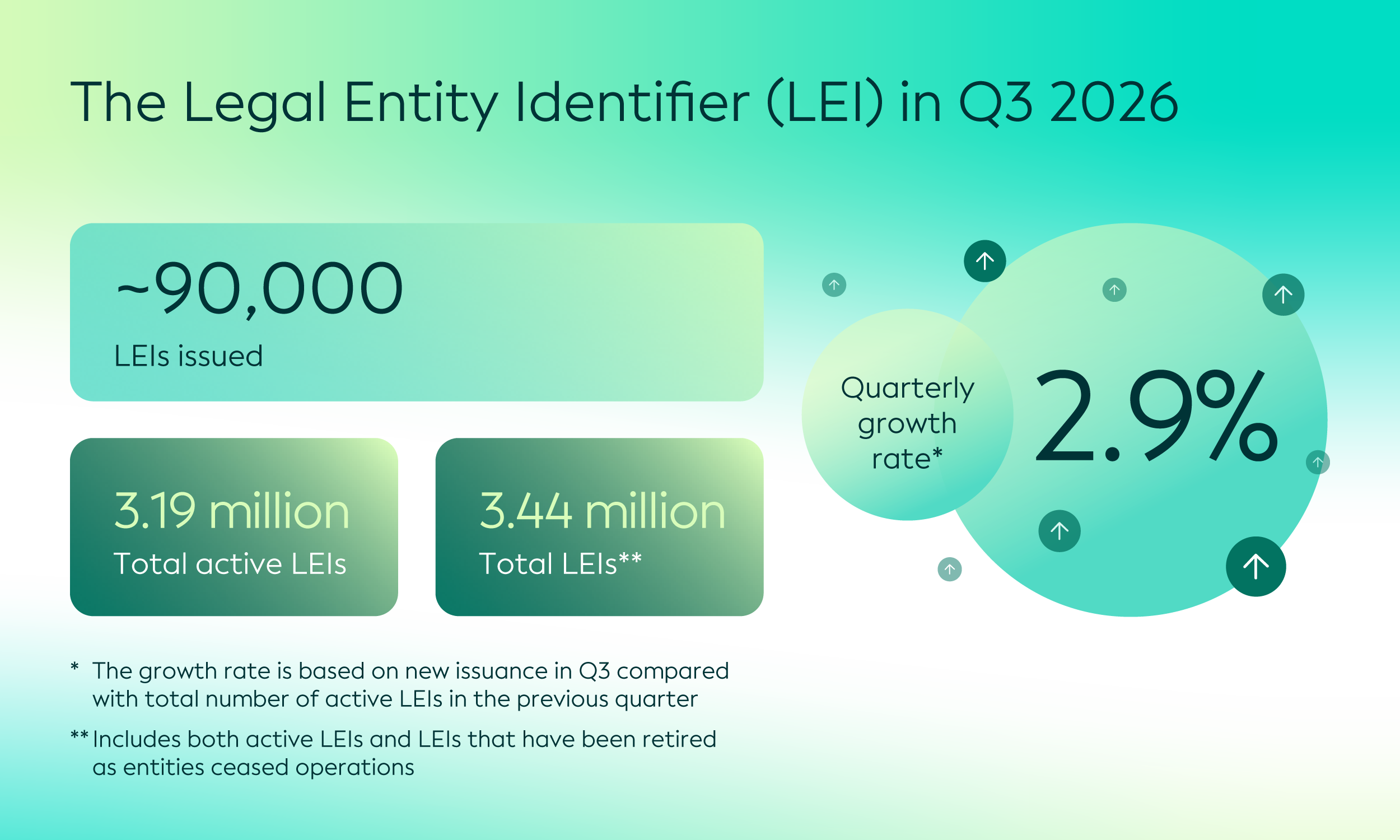
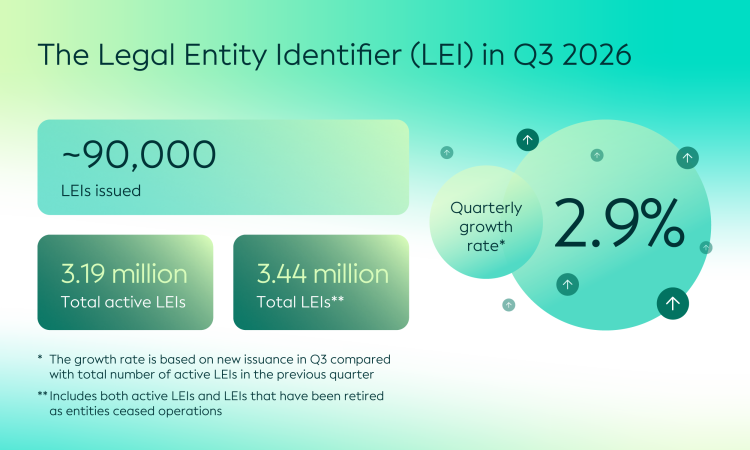
90,000 organizations worldwide obtained a Legal Entity Identifier (LEI) in Q3 2026, bringing the total active LEI population to 3.19 million. This means that each business day, an average of 1,400 businesses actively reached out to an LEI issuer, went through the registration and validation process, and obtained their LEI. This also represents a quarterly growth rate of 2.9%, which is particularly strong when accounting for seasonality, with issuance up around 11% in Q3 2025. The total LEI population, which includes both active LEIs and LEIs that have ceased operations, stood at more than 3.44 million at the end of the quarter.
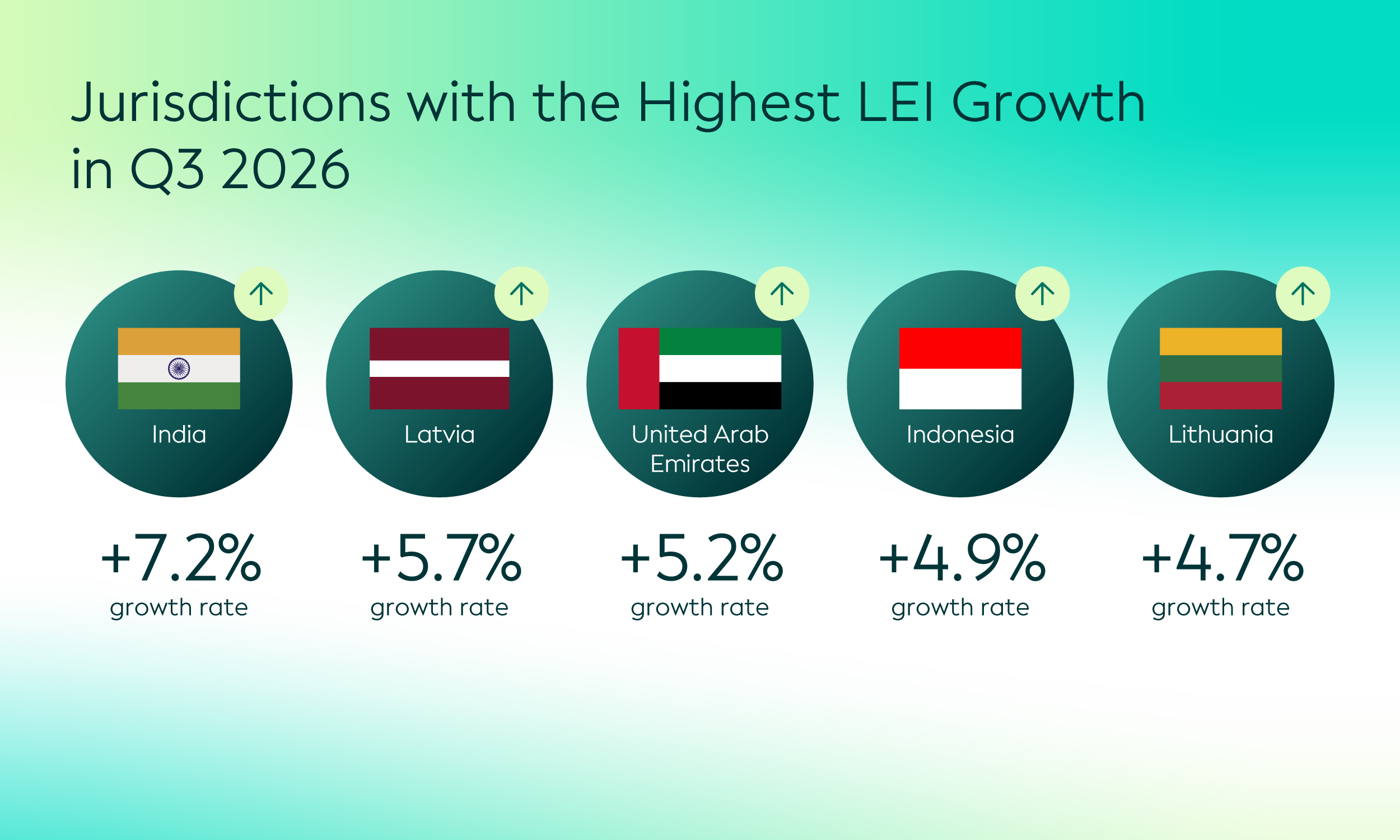
India reinforced its position as the world’s largest LEI jurisdiction, once again recording the highest LEI growth rate (7.2%). Elsewhere, Indonesia recorded a 4.9% increase amid a regulatory push to improve corporate transparency and fight financial crime in line with international standards set by bodies such as the Financial Action Task Force (FATF).
The ongoing application of the European Union’s Digital Operational Resilience Act (DORA) continued to drive growth across Latvia (5.7%) and Lithuania (4.7%). LEI issuance in the United Arab Emirates increased by 5.2%.
An Expanding, More Connected Global LEI System
Continued advances in LEI issuance worldwide are being enabled by the ongoing expansion of the Global LEI System as an internationally recognized organizational identity management infrastructure and a global Digital Public Infrastructure (DPI).
In Q3 2026, a new LEI issuer, The Intelligence Company AB, began operating within the Global LEI System. GLEIF also welcomed eMudhra Limited as the latest Validation Agent to help meet increasing demand for the LEI in India and internationally. There are now over 20 Validation Agents, spanning Africa, Australasia, China, Europe, India, the Middle East, and North America.
Several ongoing initiatives are also extending the reach of the Global LEI System and helping build a more connected and interoperable data ecosystem that meets growing regulatory and market demand for trusted information:
LEI Linking to Registration Authorities
GLEIF’s 'linking' initiative boosts business discoverability and eases cross-border counterparty due diligence. By adding a dedicated URL to the LEI records of entities registered by participating authoritative sources, the initiative enables easy and direct access to each entity’s official registration data and associated documentation on the relevant register's website. The recent addition of Estonia’s Centre of Registers and Information Systems (RIK) and the New Zealand Companies Office brings the total number of linked registers to six, alongside the Netherlands Chamber of Commerce (KVK), the United Kingdom’s Companies House, the Swiss Federal Statistical Office (FSO), and France’s National Institute of Statistics and Economic Studies (Insee).
GLEIF Mapping Network
GLEIF’s mapping network connects the LEI with widely used identifiers across financial messaging, securities markets, corporate data, and the energy sector. GLEIF has established certified mapping relationships between the LEI and the S&P Capital IQ Company ID, SWIFT-managed Market Identifier Code (MIC) and Business Identifier Code (BIC), the Association of National Numbering Agencies’ (ANNA) International Securities Identification Numbers (ISIN), Qichacha’s QCC Code, and the Global Energy Monitor (GEM) Entity ID.
More mapping relationships are expected to be announced in the coming quarter.
Global Open Data Integration Network (GODIN)
GODIN is a GLEIF-led initiative launched in 2025 to enhance connectivity and interoperability across global open data ecosystems. In Q3 2026, Open Supply Hub, Wikimedia Deutschland (the developer of Wikidata), and Wikirate International joined GODIN, alongside existing members Corruption Data Collective, Data and Research Center (DARC), GEM, Global Media Registry, Open Data Services, Open Ownership, and OpenSanctions. Their addition further expands the network’s reach and applicability across sustainability, supply chain transparency, and open knowledge use cases.
This sustained growth reflects the Global LEI System's growing use by regulators and market participants worldwide to promote greater transparency. Looking ahead, there are clear opportunities to further extend the reach, coverage, and utility of the Global LEI System worldwide by making legal entity information even more accessible.
Quarterly LEI System Business Reports – Key Data Points
The Global LEI System empowers everyone, everywhere, with open, standardized, high-quality data that is regularly revalidated to ensure it is accurate, up-to-date, and usable, promoting trust and transparency across the global economy.
Key data points tracked within the Quarterly LEI System Business Reports are:
Renewal rates
The Global LEI System is unique in providing full transparency regarding when entity data was last verified, with the annual renewal process ensuring that both legal entities and LEI issuers review and revalidate legal entity reference data at least once per year.
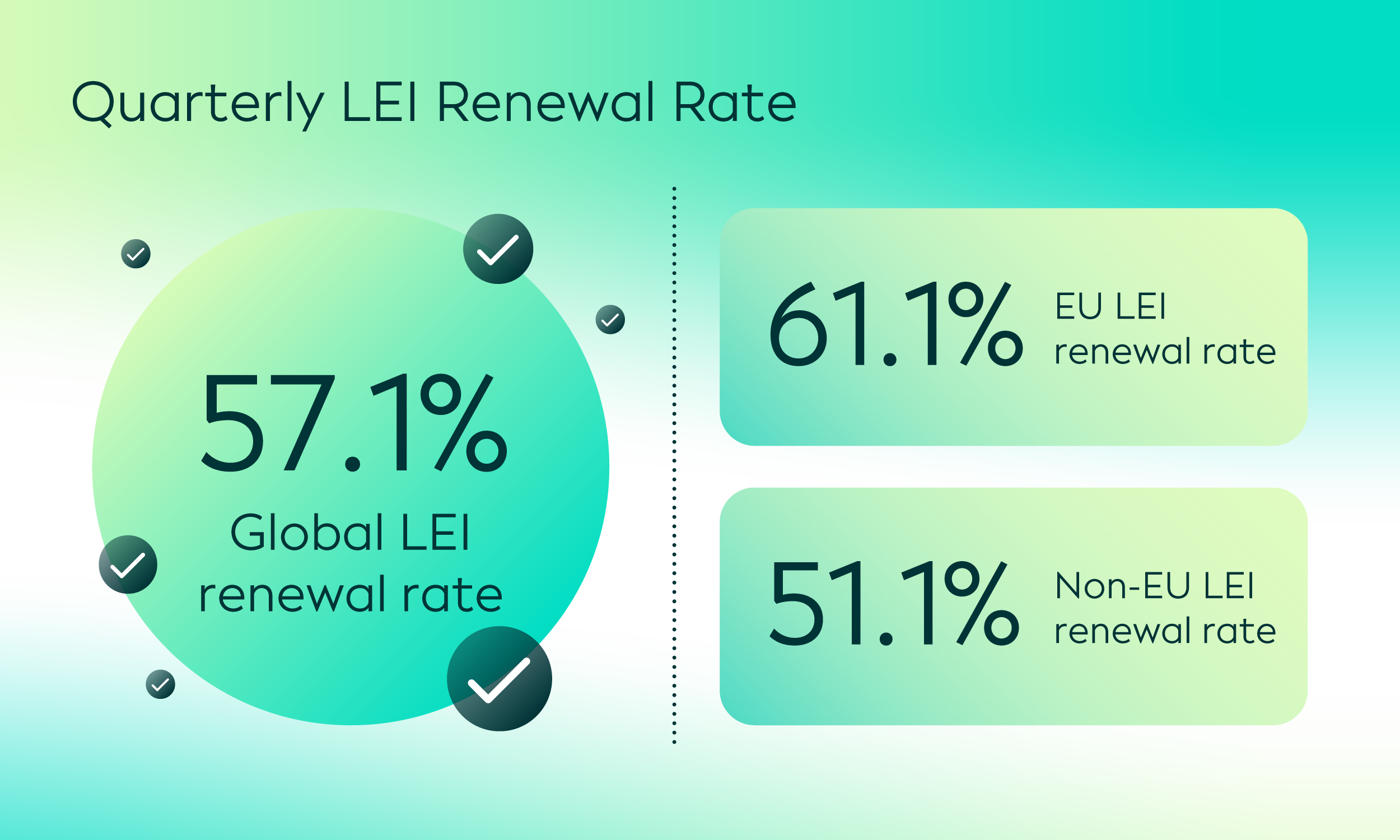
The overall renewal rate was stable at 57.1% in Q3 2026. Renewals tapered slightly in EU jurisdictions to 61.1% and increased in non-EU jurisdictions to 51.1%. The jurisdictions with the highest renewal rates were once again Japan (88.6%), Finland (81.8%), India (78.1%), Germany (73.1%), and Liechtenstein (72%).
Corroboration
Corroboration verifies the existence of a legal entity and its reference data, such as name, address, legal form, and corporate structures, against authoritative sources listed in the GLEIF Registration Authority List. LEI issuers validate the information provided by the legal entity by comparing it against the publicly available authoritative data.
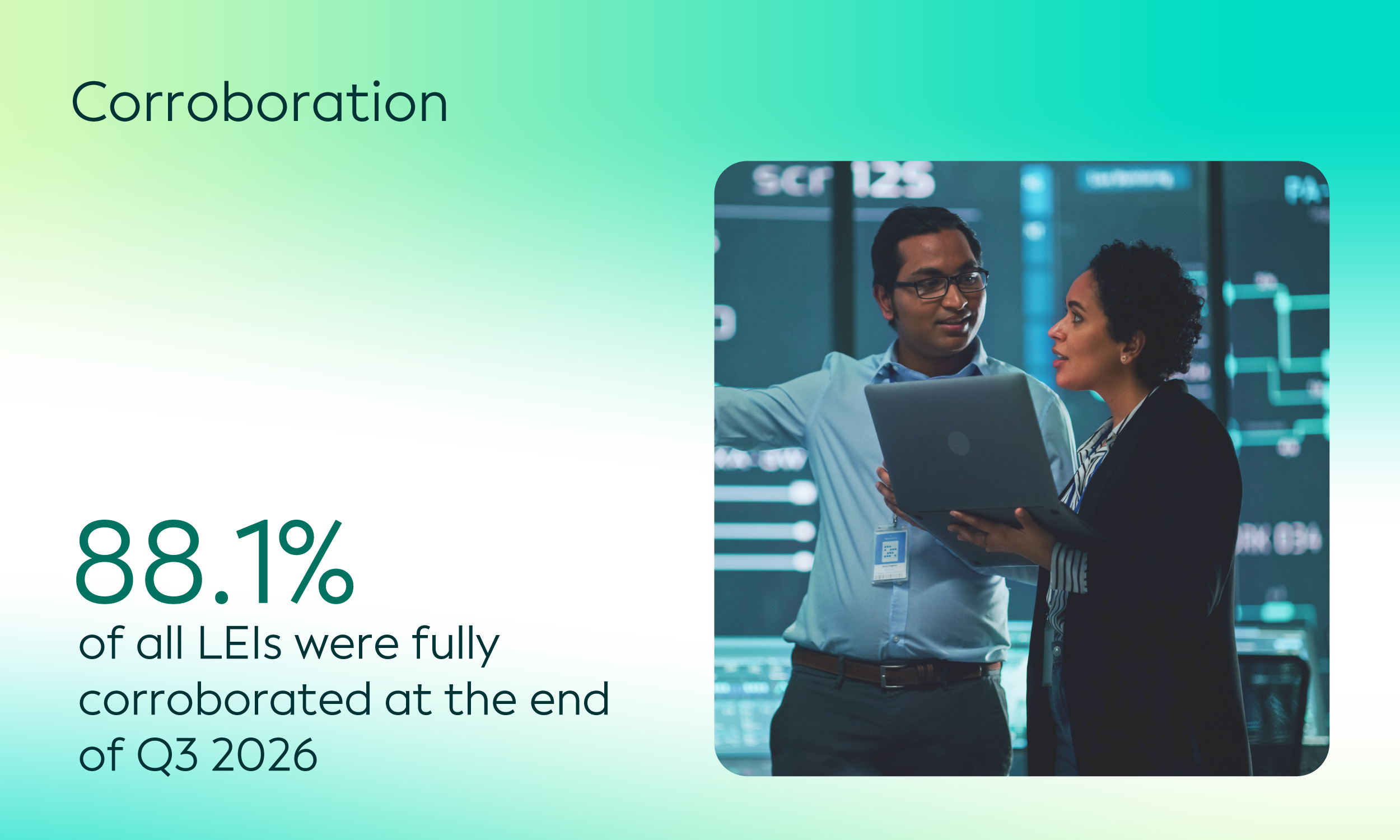
88.1% of all LEIs were fully corroborated at the end of Q3 2026. This means all reference data elements were validated against public authoritative sources.
Entity categorization
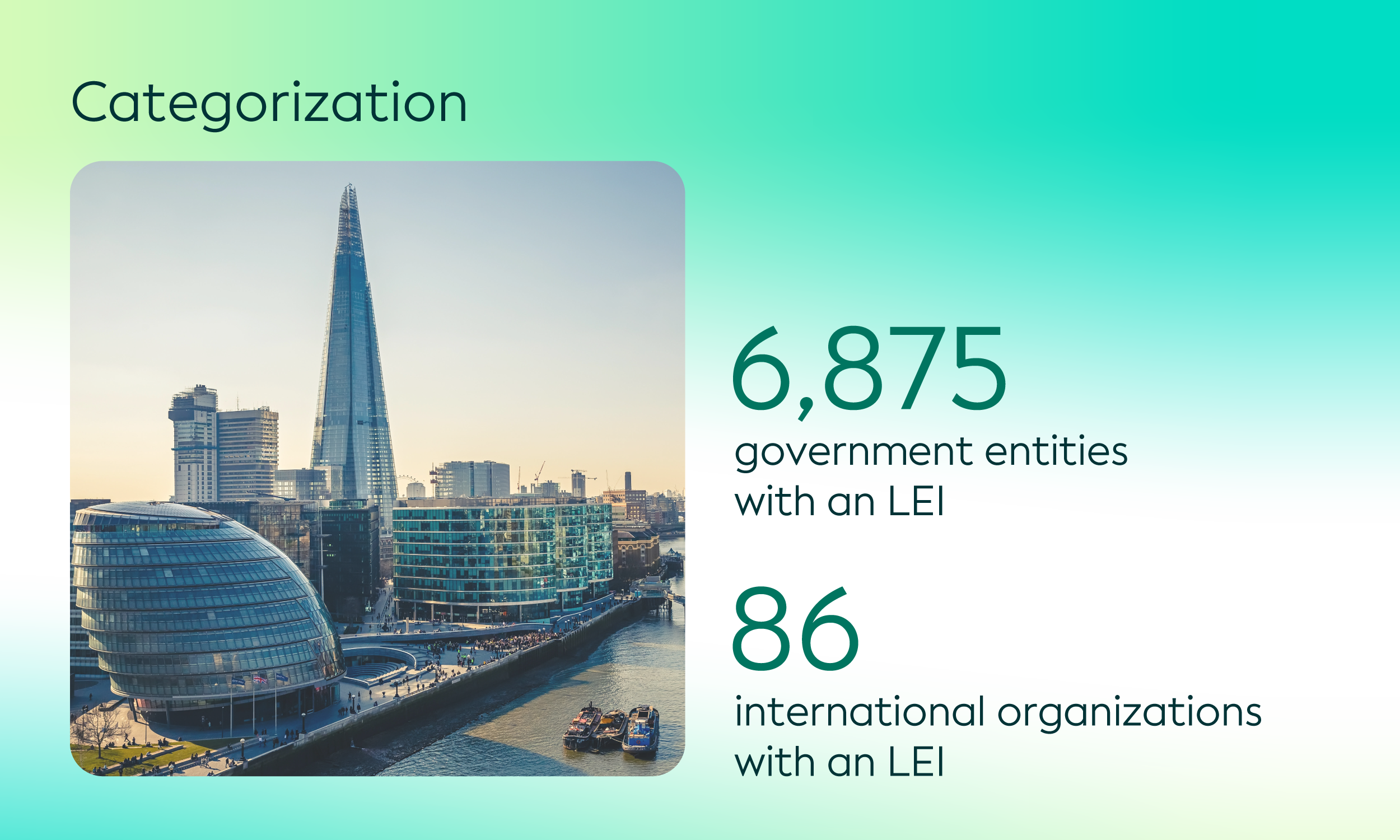
Dedicated categories identify government entities and international organizations with an LEI to address their unique considerations and ensure high data quality. In Q3 2026, 6,875 entities were identified as government entities (up from 6,791 in Q2 2026) and 86 as international organizations (up from 84 in Q2 2026).
Fund relationship reporting
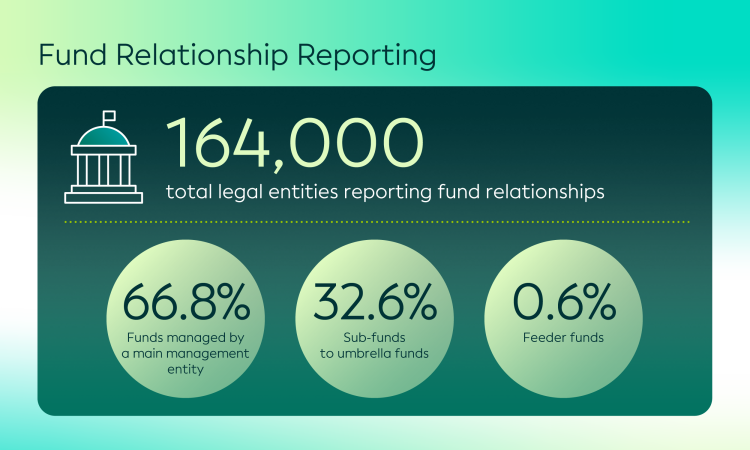
Many legal entities with an LEI are investment funds. To better understand relationships between fund entities and investment funds globally, three main types of fund relationships are categorized: fund management entities, umbrella structures, and master-feeder structures.
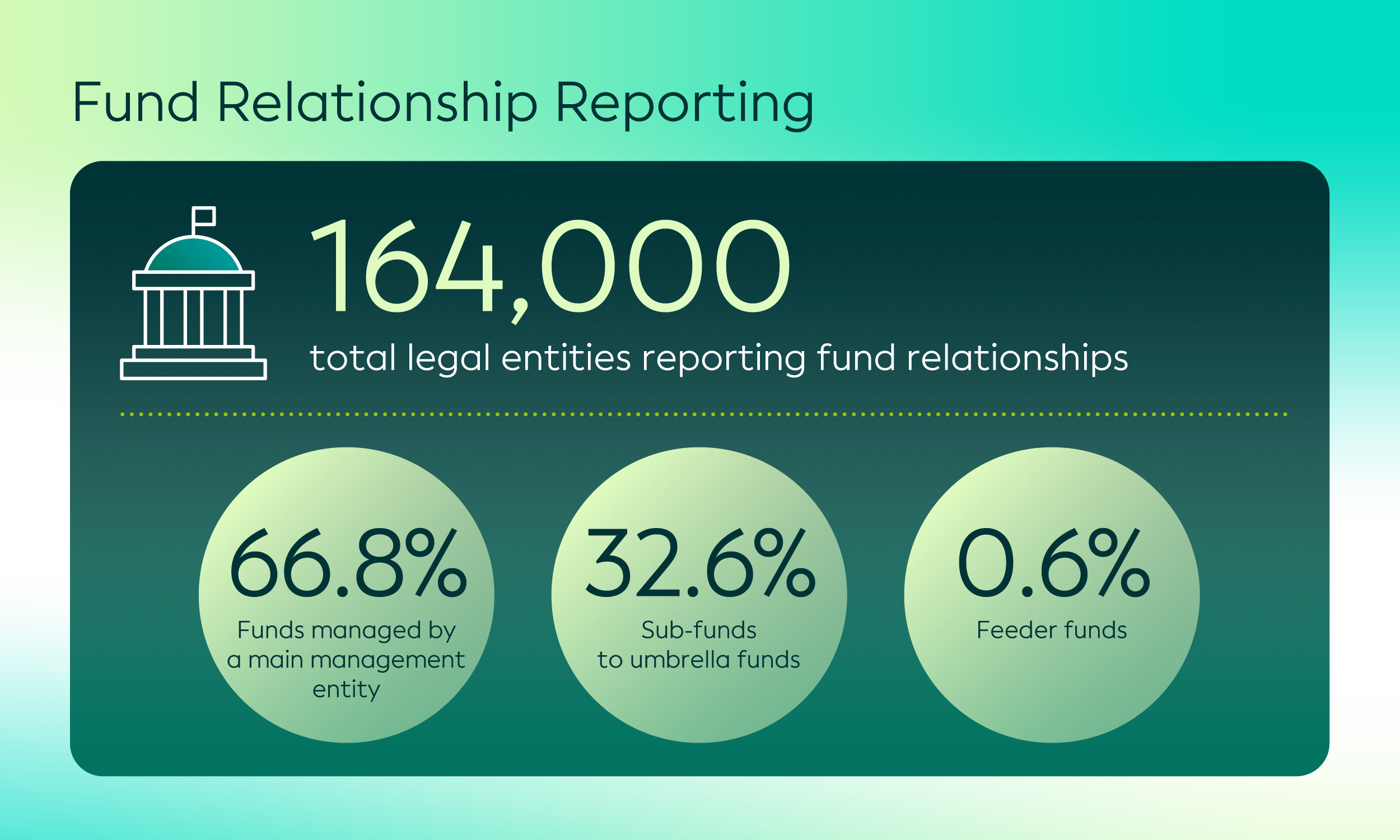
Around 164,000 legal entities reported fund relationship structures in Q3 2026, an increase of approximately 5,000 from the previous quarter. Among those, 66.8% were funds managed by a main management entity, 32.6% were sub-funds to umbrella funds, and 0.6% were feeder funds.
For the full report, which includes further detail on the status of LEI issuance and growth potential, the level of competition between LEI issuing organizations in the Global LEI System, and Level 1 and 2 reference data, please visit the Global LEI System Business Reports page.
If you are interested in reviewing the latest daily LEI data, our Global LEI System Statistics Dashboard contains daily statistics on the total and active number of LEIs issued. This feature now enables any user to review historical data by geography, increasing transparency on the overall progress of the LEI.
For further details or to access historical data, please visit the Global LEI System Business Report Archive.
We look forward to sharing our progress each quarter as we continue to drive LEI adoption in 2026.
If you would like to comment on a blog post, please identify yourself with your first and last name. Your name will appear next to your comment. Email addresses will not be published. Please note that by accessing or contributing to the discussion board you agree to abide by the terms of the GLEIF Blogging Policy, so please read them carefully.
Alexandre Kech is the CEO of the Global Legal Entity Identifier Foundation (GLEIF).
Prior to joining GLEIF, Alexandre Kech was Head of Digital Securities at the SIX Digital Exchange. As a member of the Executive Board, Alex had full executive responsibility for the Digital Securities business vertical, including sales and relationship management, product development, business design, and ecosystem expansion.
Over the past 25 years, Alex has constructed a unique career combining finance at BNY Mellon, payments/securities infrastructure and standards at SWIFT, and blockchain and digital assets at Onchain Custodian (ONC) and, most recently, Citi Ventures. As co-founder and CEO of ONC, Alex led the Singapore and Shanghai-based team that built custody and prime brokerage services for crypto and other digital assets from scratch. As Blockchain & Digital Asset director at Citi Ventures, he built a team to engage the European ecosystem on emerging use cases for blockchain technologies and digital assets.
Alex is also involved in industry and standardization initiatives. As the convenor of the ISO TC 68 / SC8 / WG3, which produced the ISO 24165 Digital Token Identifier (DTI), he is a member of the DTI Foundation Product Advisory Committee. He also recently served as co-chair of the Global Digital Finance (gdf.io) custody working group.
Alex earned a bachelor’s degree in translation and an Executive MBA from the Quantic School of Business and Technology while building Onchain Custodian, putting theory into practice in real-time.