Planned maintenance: Brief service interruptions may occur between 19 October and 4 November 2026.
News & Media
GLEIF Blog
Transforming Data into Opportunities: Metric in Motion – After the Challenge: Rate, Resubmit, Improve
A resolved data challenge does not always mean the feedback process is complete. With just a few additional clicks, data users can rate a resolution or resubmit a challenge that still needs attention. In this blog, Zornitsa Manolova, Head of Data Quality Management and Data Science at GLEIF, explains how these simple features help close the feedback loop and support the continued accuracy and completeness of Legal Entity Identifier (LEI) data.
Author: Zornitsa Manolova
Date: 2026-09-07
Views:
High-quality Legal Entity Identifier (LEI) data is a shared effort. The GLEIF Data Challenge Facility enables any LEI data user to challenge the accuracy or completeness of a LEI record at any time, including relationship information, possible duplicate registrations, and other related issues.
Combined with GLEIF’s robust data quality program, this approach creates a powerful second layer of quality assurance that promotes confidence in the Global LEI System and enables informed decision-making – increasing trust and transparency across the global economy.
Once a challenge is raised, it is forwarded to the relevant LEI issuer, who investigates the issue and, where appropriate and supported by verification, determines whether the LEI data should be updated. The aim is typically to resolve a challenge within ten business days.
While swift resolution is key, what happens after the issuer responds is just as important. A resolution does not necessarily mean that every concern has been fully addressed. Perhaps the data was updated, but not in the way you expected. Maybe the explanation did not address the issue you originally flagged. Or perhaps the resolution was exactly right, and you want to confirm that the process worked well.
In response to these considerations, GLEIF has introduced dedicated features to support the ongoing improvement of the challenge process itself and increase overall LEI data quality.
Low effort, high value: Rate, resubmit, improve
Recent user feedback reinforces the importance of the ability to go beyond simply raising a challenge. In our recent poll on priorities for the Data Challenge Facility, a combined 70% of respondents identified clear resolution and an option to resubmit challenges as important areas for improving the overall user experience.
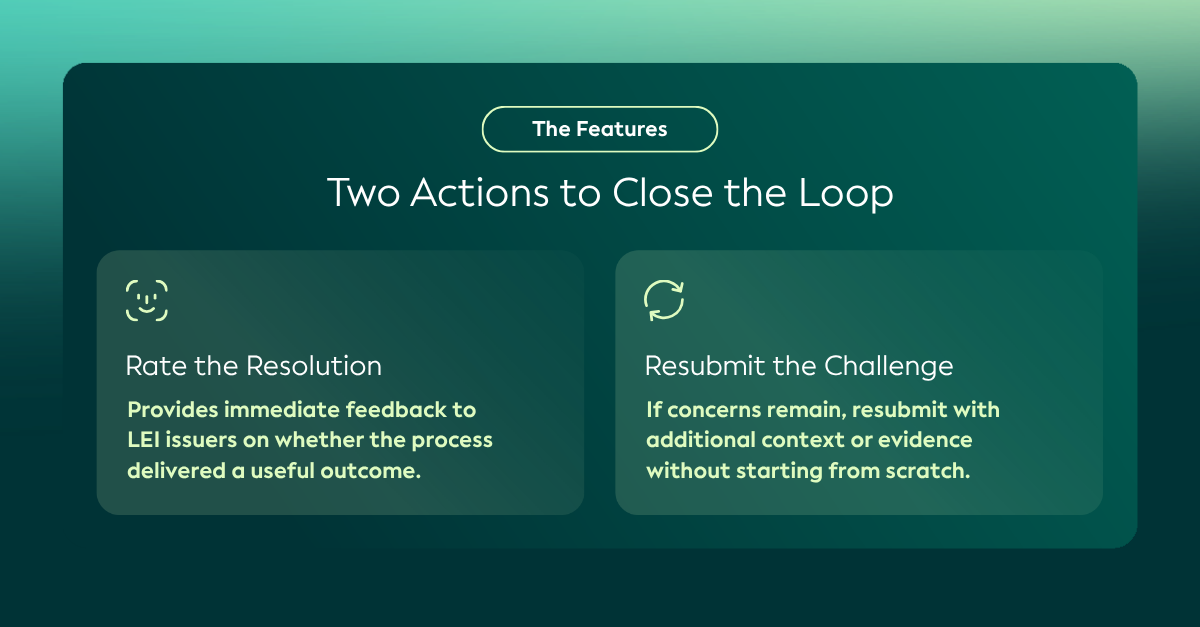
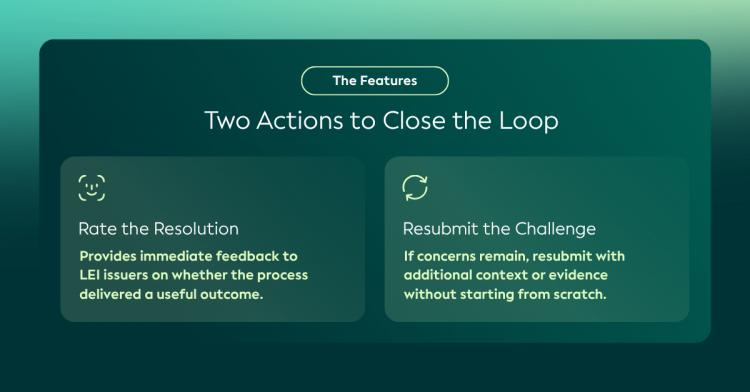
That is precisely where two new features in the Data Challenge Facility, enabling data users to rate the resolution or resubmit the challenge, can help. Both features are available for 28 days after the challenge is resolved:
Was the resolution helpful? Rate it
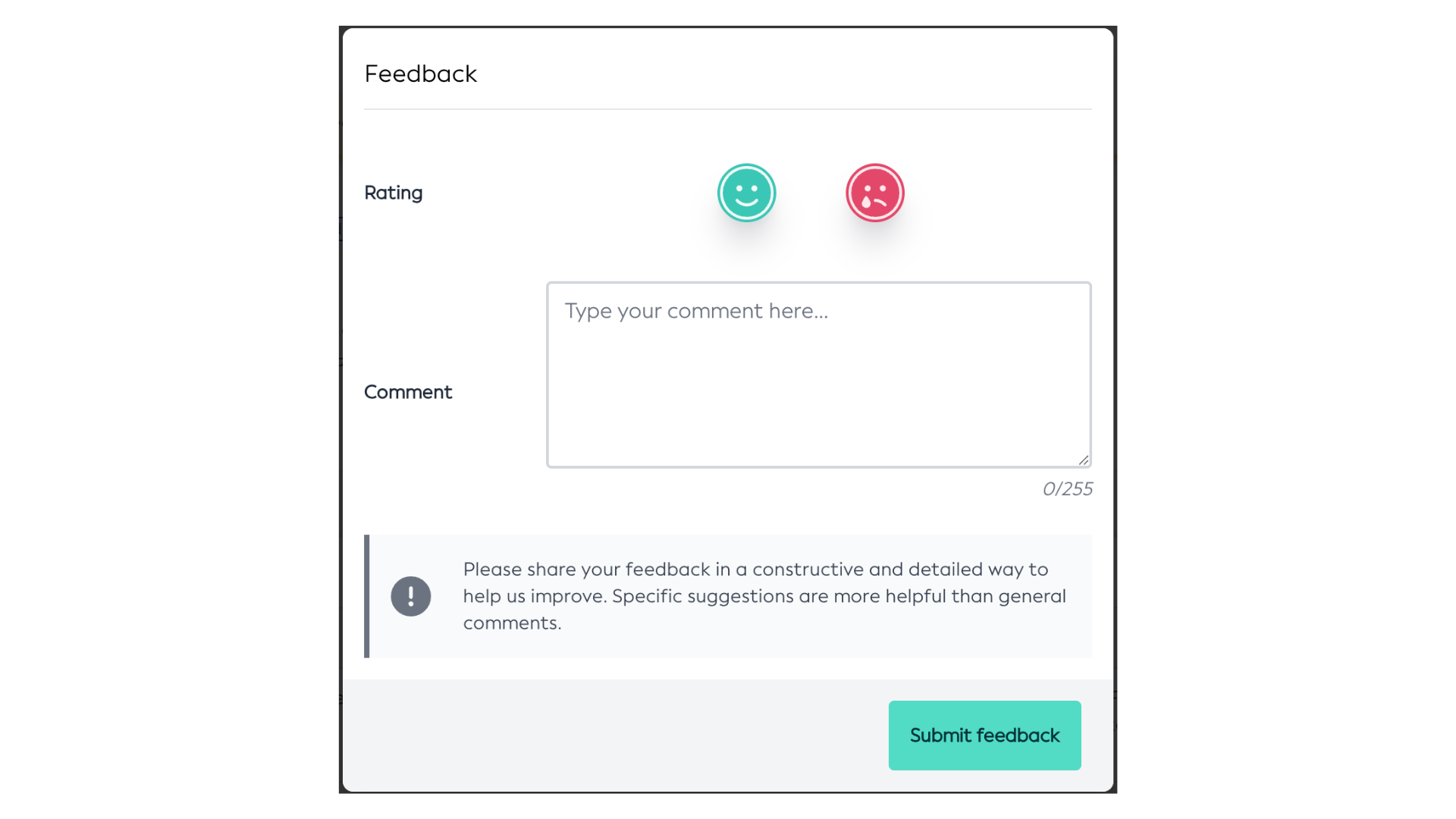
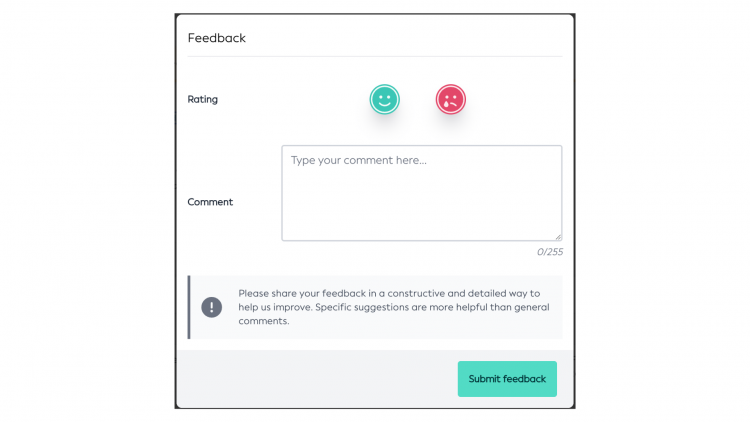
When a challenge is resolved, you can provide feedback directly in the Data Challenge Facility. You can indicate whether you were satisfied or dissatisfied with the resolution and, if you wish, add a comment explaining your rating.
Why it matters:
A positive rating lets LEI issuers know that the process worked well and the issue is resolved. A negative rating, particularly when accompanied by a constructive comment, can help highlight where the overall experience or resolution could be improved.
Low effort – high value: Rating the outcome is just one small additional step, but it provides important feedback that drives ongoing improvements.
Still have concerns? Re-submit your challenge
Sometimes a resolution may not fully address the issue you originally raised. Relevant information may need another look, additional context may have become available, or you may have further evidence supporting the proposed change.
In these cases, you do not need to start again from scratch.
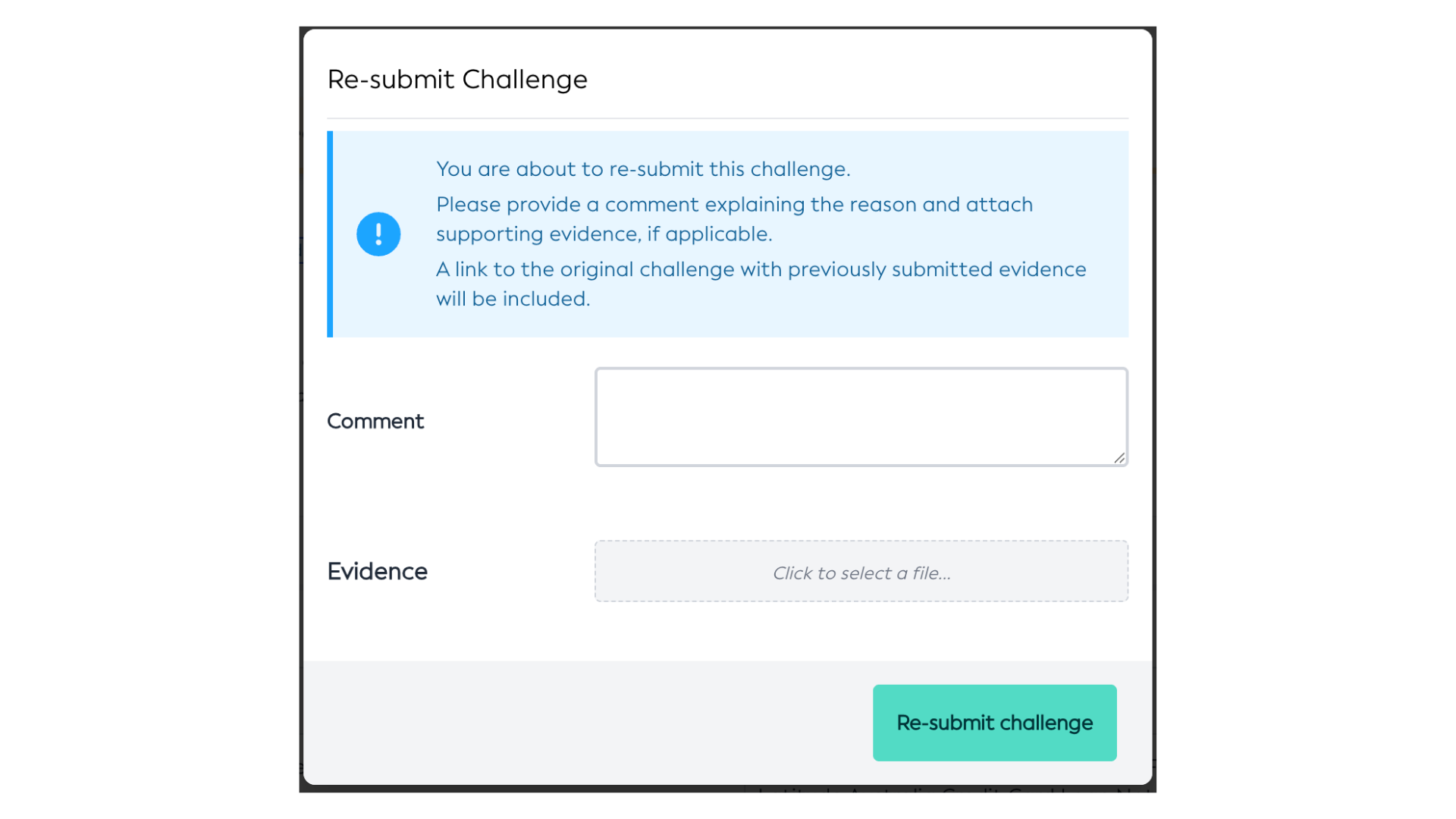
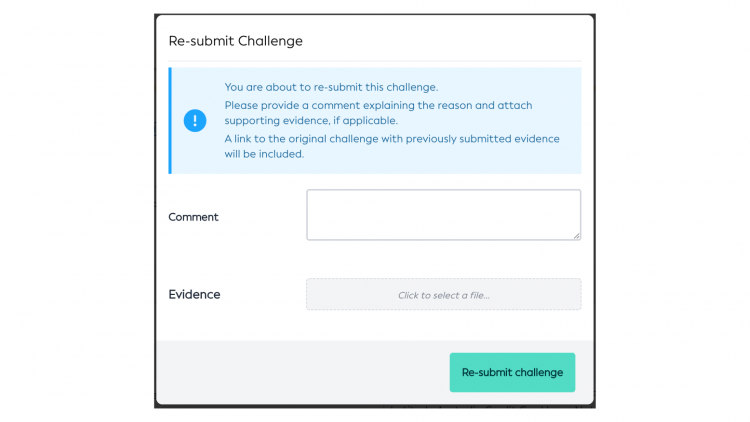
A new challenge can be created that contains a copy of the previously challenged fields and their proposed values. You can then add a comment explaining why you are resubmitting and provide new evidence where relevant. The original and re-submitted challenges remain linked for easy reference.
Why it matters:
Re-submission gives you a clear way to signal that an issue still needs attention. Rather than starting over or allowing an unresolved concern to end with the original resolution, you can provide additional context or evidence and ask that the matter be reviewed again. It keeps the issue's history intact while providing the issuer with additional information to consider.
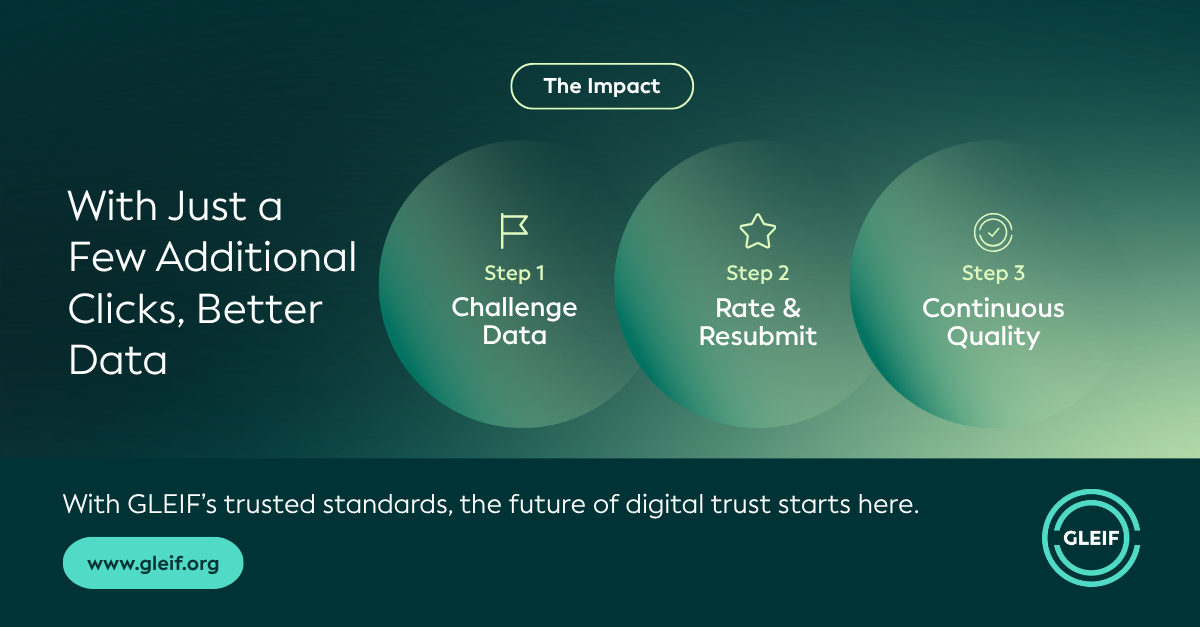
With just a few additional clicks, better data
The GLEIF Data Challenge Facility enables any LEI data user to contribute directly to the accuracy and completeness of the Global LEI System.
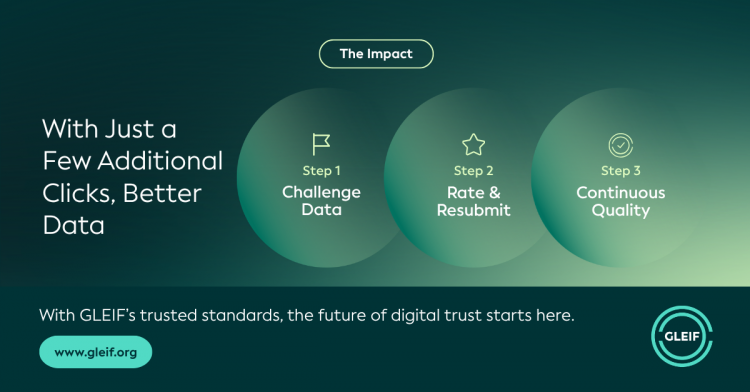
Raising a challenge starts that contribution. Rating the resolution provides feedback on whether the process delivered a useful outcome. If an issue remains unresolved, resubmitting the challenge gives the LEI issuer additional context or evidence to consider.
The next time a challenge is resolved:
Take a few seconds to rate the outcome.
If the issue remains unresolved, resubmit the challenge with any additional context or evidence.
These small actions help close the feedback loop and support the continued quality and usability of LEI data.
If you would like to comment on a blog post, please identify yourself with your first and last name. Your name will appear next to your comment. Email addresses will not be published. Please note that by accessing or contributing to the discussion board you agree to abide by the terms of the GLEIF Blogging Policy, so please read them carefully.
Zornitsa Manolova has been leading GLEIF’s Data Quality Management and Data Science team since April 2018, responsible for safeguarding and continuously improving data quality and governance across the Global LEI System by using advanced analytics to turn complex data into trusted infrastructure. With a long-standing focus on artificial intelligence and machine learning dating back to her university studies, Zornitsa has consistently applied cutting-edge analytical techniques to complex, real-world data challenges. Before joining GLEIF, she managed international forensic data analytics projects at PwC Forensics, supporting large-scale financial investigations and developing sophisticated approaches to entity resolution, anomaly detection, and data-driven insights.