Transforming Data into Opportunities: Metric in Motion – How AI Can Strengthen Ownership Transparency
Organizations increasingly rely on relationship data for risk management, due diligence, compliance, and transparency. In this blog, Zornitsa Manolova, Head of Data Quality Management and Data Science at GLEIF, explores how AI offers new opportunities to improve the quality, completeness, and accessibility of trusted ownership information at scale.
Author: Zornitsa Manolova
Date: 2026-06-08
Views:
In an increasingly interconnected global economy, the ability for organizations to trust and use data effectively is the foundation for innovation, growth, and competitiveness.
A high-quality data ecosystem is a driver of change and innovation that enables organizations to identify and seize new opportunities, while low data quality can lead to inefficiencies and exposure to regulatory and reputational risks.
To aid broader industry awareness of GLEIF’s data quality initiatives and its application to different sectors, this new blog series explores key metrics included within the reports.
This month’s focus: how AI can strengthen ownership transparency.
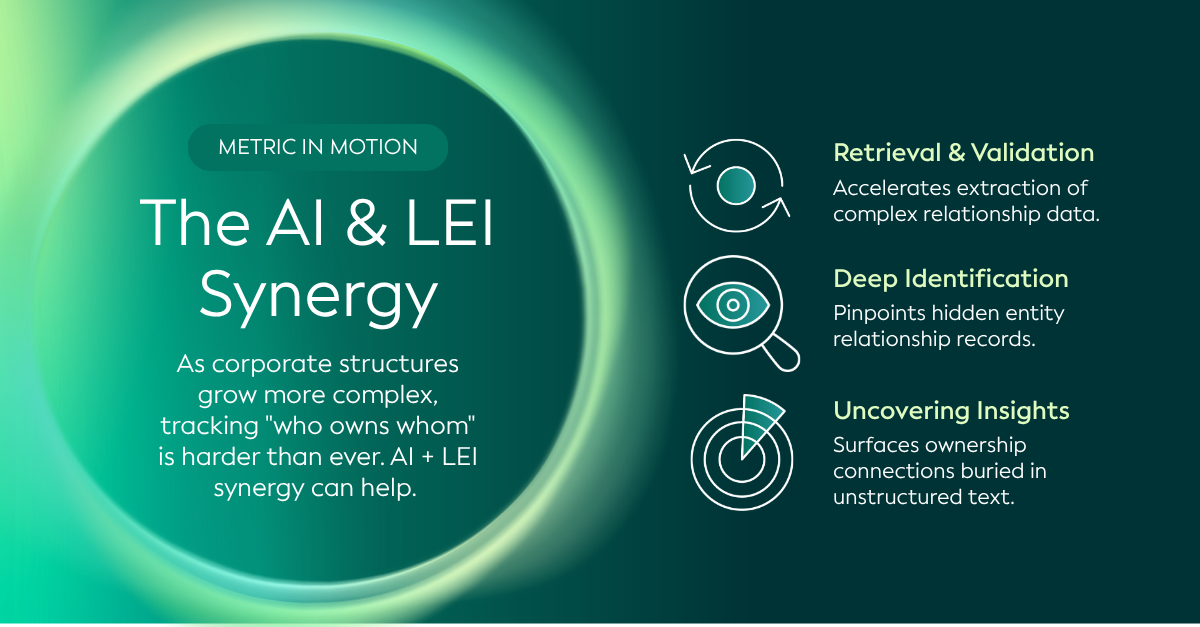
As global corporate structures become more complex, access to trusted ownership and relationship data is increasingly important for transparency, accountability, and risk insight. This data, which includes parent and subsidiary relationships, helps organizations assess risk, support compliance and make more informed decisions by showing how legal entities are connected.
Within the Global LEI System, Level 2 data provides this critical context by identifying parent and subsidiary corporate structures, branch-headquarters connections, and fund relationships. Often described as answering the question "who owns whom", Level 2 data helps reveal the structures behind legal entities and strengthens trust across financial and business ecosystems.
Understanding the Value of Level 2 Data in the Global LEI System
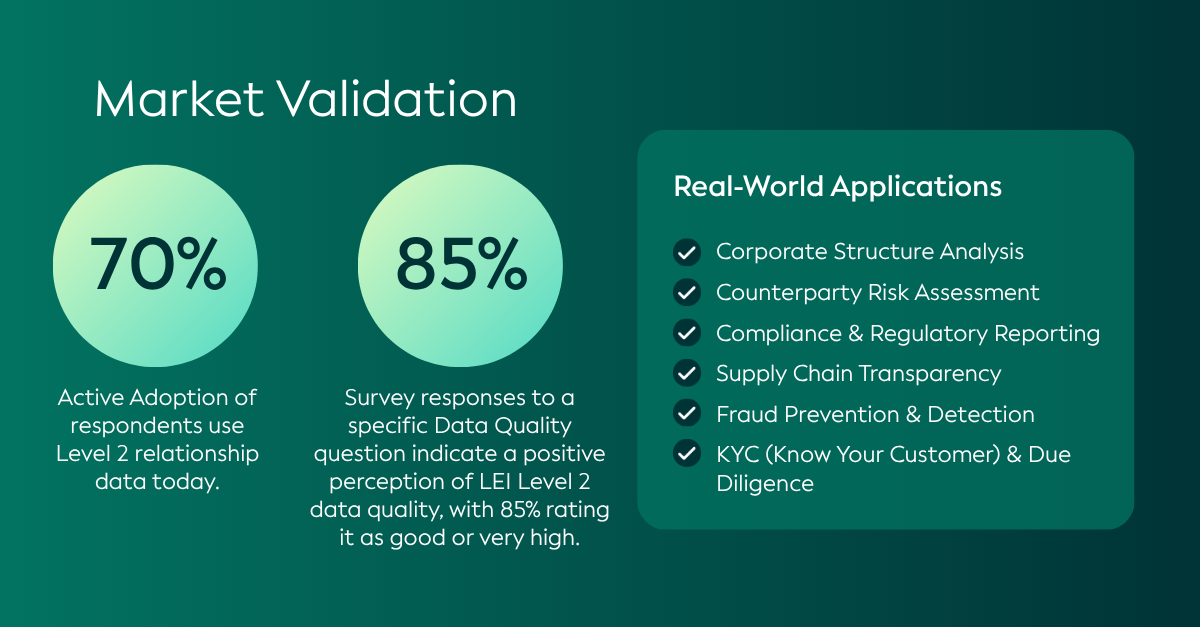
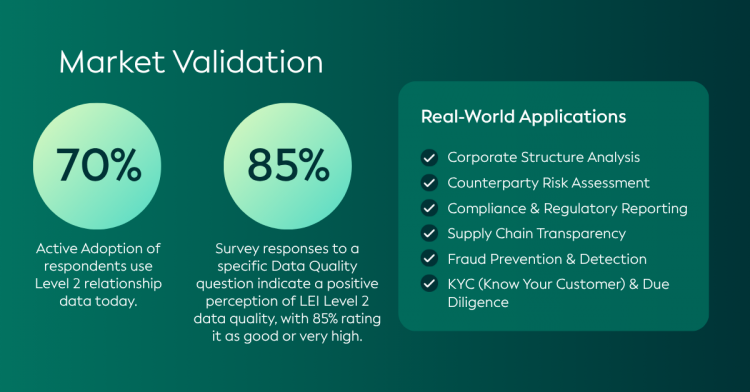
A recent survey conducted by the Regulatory Oversight Committee (ROC) and GLEIF highlights the value of Level 2 data. Approximately 70% of respondents reported using Level 2 data, while nearly 85% said they consider it to be quality data. Respondents also confirmed that Level 2 data is already integrated into their organizational decision-making and reported using Level 2 data to support various operational and strategic processes, with many valuing consolidated parent relationships in particular.
These findings highlight a key trend. As demand for reliable ownership information increases, maintaining high-quality relationship data at scale is critical.
AI Opens New Possibilities for Relationship Data Extraction
With artificial intelligence (AI) transforming how organizations manage and analyze data, new opportunities are emerging to meet this need to further enhance the quality, completeness, and reliability of relationship data.
For instance, valuable relationship information is already widely available – but it is often difficult to access because it is buried in annual reports and other corporate disclosures. Parent and subsidiary details may appear in footnotes, tables, notes to financial statements, or narrative sections. These disclosures are often fragmented, inconsistently formatted, and difficult to review manually at scale, making it challenging to integrate them into structured datasets.
AI-driven extraction offers a practical way to unlock this hidden information. By identifying, interpreting, and structuring ownership details from annual reports and other complex PDF documents, AI can help transform unstructured information into structured relationship data. It can also compare information across documents. This can improve the retrieval and validation of Level 2 data, supporting better risk analysis and decision-making and enhancing the overall quality and transparency of the Global LEI System.
In fact, GLEIF is already using AI-based extraction to retrieve the relationship data from annual reports and convert it into structured format. This enables GLEIF to review and confirm existing relationship information in the Global LEI Index, or trigger updates where needed, outside the annual renewal process. As a result, relationship data can be kept more current and trusted over time.
Advances to the Transparency Fabric – a joint initiative introduced by GLEIF, Open Ownership, and OpenSanctions – in 2025 also introduced the use of Large Language Models (LLMs) to extract and analyze information from unstructured documents to better map complex ownership structures and support the linking of LEIs with beneficial ownership and sanctions data.
How It Works
The automated process identifies all subsidiaries of parent companies in an annual report PDF using an LLM multi-step process:
First, the AI reviews the report and identifies possible subsidiaries based on the definitions and examples provided. It then checks its own results to identify potential gaps, missing subsidiaries, or entries that may have been included incorrectly.
After this review, the results are refined into a final list in the required format. This includes removing false positives, adding any missed subsidiaries, checking the relevant page references, and standardizing details such as jurisdiction or country information.
Finally, the AI-generated list can be compared with a manually extracted list to assess accuracy, completeness, and overall quality.
This demonstrates how AI can help accelerate the extraction of subsidiary data from complex PDF documents. At the same time, combining human oversight remains important to validate the results, improve quality, and ensure the final relationship data is reliable.
Using Trusted LEI Data to Improve AI Itself
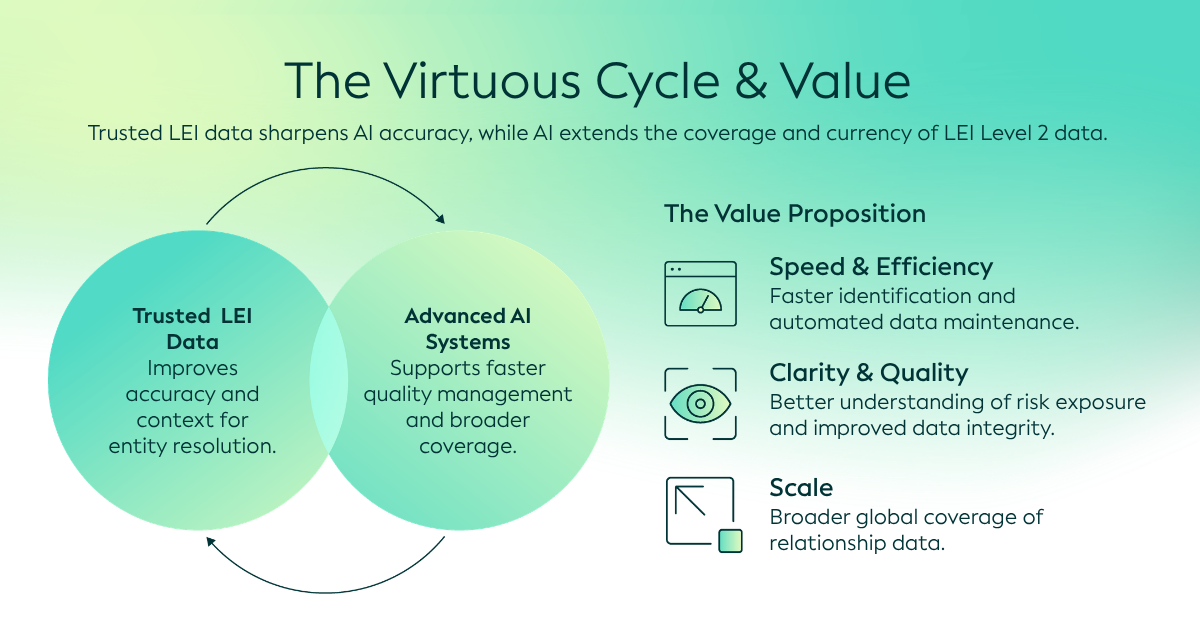
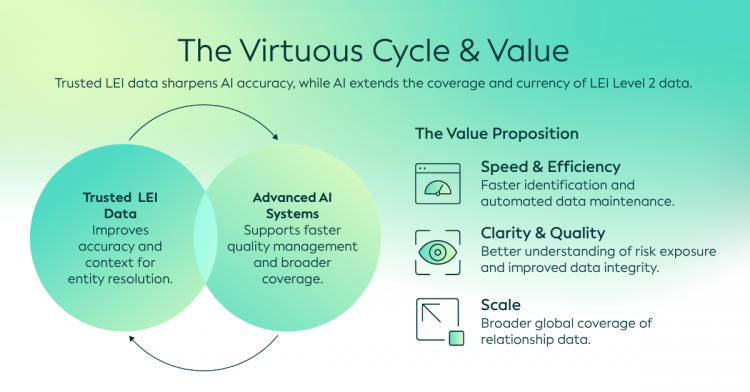
While AI can help find and check Level 2 relationship data, trusted LEI data can, in turn, enhance the use of AI methods for this task.
GLEIF has used existing LEI data and annual reports to optimize prompts using the GEPA approach, or Genetic Pareto Reflective Prompt Evolution. Rather than guessing which prompt might perform best, GEPA uses labeled data and human feedback to evolve stronger prompt variants, test them against known examples, and retain the best-performing trade-offs.
This approach shifts AI development from experimentation to measurable improvement. For example, a GEPA-enhanced prompt improved the measurable accuracy of the retrieved relationship information. Even more interestingly, a smaller and cheaper model performed better than a larger and more expensive model after optimization. This demonstrates that high-quality data and structured optimization often matter more than using a larger model. Put simply, better inputs create better outputs.
Combining AI Innovation with Trusted Data Foundations
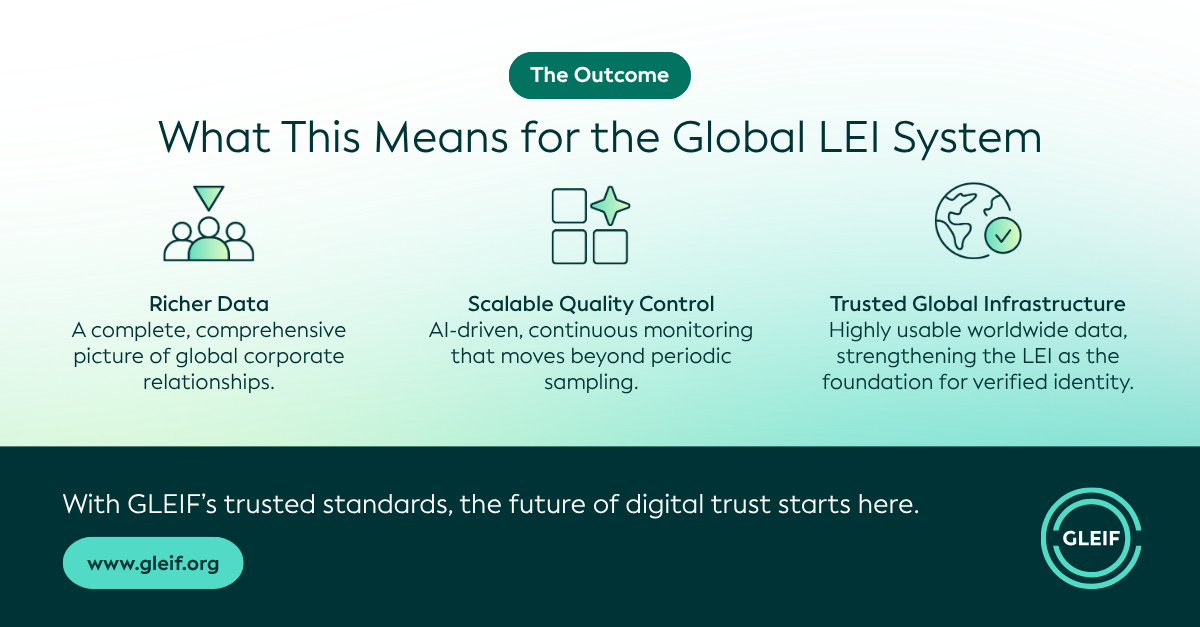
The most valuable outcome from AI-driven relationship data extraction is the ability to transform fragmented disclosures into reliable, structured, and actionable relationship intelligence – enabling organizations to make more informed decisions across the global economy.
Yet trusted frameworks, governance, and standardized identifiers remain essential for ensuring these insights are reliable and usable. By combining AI innovation with the trusted foundations of the Global LEI System, there is an opportunity to strengthen the quality, coverage, and usability of ownership and relationship data at scale.
If you would like to comment on a blog post, please identify yourself with your first and last name. Your name will appear next to your comment. Email addresses will not be published. Please note that by accessing or contributing to the discussion board you agree to abide by the terms of the GLEIF Blogging Policy, so please read them carefully.
Zornitsa Manolova has been leading GLEIF’s Data Quality Management and Data Science team since April 2018, responsible for safeguarding and continuously improving data quality and governance across the Global LEI System by using advanced analytics to turn complex data into trusted infrastructure. With a long-standing focus on artificial intelligence and machine learning dating back to her university studies, Zornitsa has consistently applied cutting-edge analytical techniques to complex, real-world data challenges. Before joining GLEIF, she managed international forensic data analytics projects at PwC Forensics, supporting large-scale financial investigations and developing sophisticated approaches to entity resolution, anomaly detection, and data-driven insights.